Thwarting Public Health:

THE INITIAL AND POWERFUL MOMENT OF DOUBT

It starts with a niggling feeling. People have called intuition that quiet inner voice, or one’s “gut feeling”. It is an uneasiness passing through a dark alley late at night, or that “A-ha!” moment when unrelated things connect in an unpredictable – but not undetectable – way. We rely on our “nigglings” to tie together accumulated experiences with earlier considerations and when activated towards something not immediately rational, these gut feelings are  enough to tip the balance towards belief.

Psychology Today defines intuition as, “hunches…generated by the unconscious mind rapidly sifting through past experience and cumulative knowledge” (https://www.psychologytoday.com/intl/basics/intuition). In addition, this same source states that “Scientists have repeatedly demonstrated how information can register on the brain without conscious awareness and positively influence decision-making and other behavior.”

Intuition, however, is not always a GOOD influence. It also plants the seed of doubt that shapes a nascent belief and even forms conclusions before the rational, conscious mind can catch up. Because our gut feelings have been nurtured in our formative years by our parents and our culture, and because they have been credited with life-saving moments or sparks of inspiration, intuition is granted a free-pass to our decision-making process despite the short-cuts it takes.

And therein lies the problem.

Medical science unravels complexity within biological systems that are, quite simply, NOT intuitive. In the realm of science, most people cannot claim to have inner sight. There are gifted scientists who have the ability to recognize patterns and postulate hypotheses (i.e., who can “connect-the-dots”) better than others, but only after delving into a particular scientific realm to a degree that confers expert status. Newton, Darwin, Einstein, Curie, Pasteur – these scientific giants were not casual scientists. Intuition in this realm is carefully cultivated and rewarded only after repeated experimental verification.

In the scientific arena, a rational and intellectual approach reveals truths at which intuition can only guess. Scientific discovery offers evidence (not feelings) when someone asks for proof, shows repeatability (not heresay) when someone asks for confirmation, and provides explanations with predictive capabilities (not excuses or prophecies) when someone seeks understanding.

Contrast the scientific research field with the practice of medicine. Medicine is an art performed (or “practiced”) by those with a healing touch, whether they are trained or indoctrinated in the field, ranging from medical school graduates to witch doctors, those who ‘channel’ healing with an emotional, spiritual, or metaphysical focus and those who manipulate and operate purely in the physical realm. Intuition and a spontaneous judgment in this field can be positive enough to confer the healer with great respect, if only sporadically correct or provided only in a single occurrence.

“A desire to take medicine is, perhaps, the great feature which distinguishes man from other animals.”

Sir William Osler

In this way medical practitioners claim a respect bordering on idolatry in almost all cultures. Moreover, to be healed is the ultimate, personal reward for trust placed in healers. Such emotional devotion has little to do with rational understanding, and patients operate under the assumption that the doctor knows what they are doing, such that they can submit to treatments that may be even more painful or damaging than the disease itself. The decision to trust is to rely on the doctor’s intuition, not one’s own and can, quite literally, be the difference between life and death.

To Believe or Not to Believe

The dichotomy inherent in healthcare comes down to either faith in our healers in whom we are taught to trust with our lives or intellectual support of science that we don’t often understand at a deep level.

“When you reach the end of what you should know, you will be at the beginning of what you should sense.”

Khalil Gibran, Sand and Foam

Most people would agree with the quote, above, but its basis is wrong:

When addressing something you should—and indeed could – know but don’t, the impulse is to ‘go with your gut’. That’s the point when reasoning gets thwarted. 

The chasm between understanding WHAT works to heal and WHY it works often defies common sense. It is in this chasm that two very different mindsets lie. One viewpoint relies on intuition and views health and the art of medicine as a personal endeavor. They can be called the Medical Intuitists. The other ideologic framework respects rational exploration and prioritizes population health as a way to ultimately benefit the individual. They can be called the Medical Rationalists. These two mindsets are outlined in the table, below.

How these mindsets skew thinking about advances in medicine, and in particular, population health, has great consequences for adopting preventative health behaviors. Medical Intuitists channel a natural skepticism of medical advances to reject genetically modified fruit, for example. The organics movement responded to this distrust and has fostered a traditionalist viewpoint that eschews additives as foreign and potentially dangerous. People are warned to not eat anything with unfamiliar and often multi-syllabic names because of their supposed chemical and non-natural origins. In contrast, Medical Rationalists trust in: 1) the scientists who have developed genetically-modified fruit, and; 2) in the scientific and regulatory bodies that assess the population safety of these scientific advances. Medical Rationalists hesitate to discard science they do not understand because of a considered reliance on the experts and an expectation of improved health not just for themselves, but for their community.

In recent years, the bitter condemnation of one side by the other has caused a volatile situation. Smear/sneer campaigns on social media illustrate the depth of emotion and fuel further resistance to change. Sadly, it is faster and easier to discredit practices than to build sound logical arguments. Social media’s snapshot approach to communication amplifies the Medical Intuitists’ megaphones. Unfortunately for the naïve information consumer, this is occurring just as conspiracy theories are also gaining in popularity and as misinformation dilutes facts. Less vocal or at least less vocally-persuasive are the Medicial Rationalists who must build a case for science rather than tear it down. However, their culpability lies in their quickness to: a) disparage those who are scientifically-uninformed; b) denounce as spurious those non-statistically significant adverse events when they might be real and rare, and; c) ‘flip-flop’ by embracing new scientific schools of thought that seem to reverse earlier thinking. The debate between sides lacks an arbitrator, although Medical Rationalists would point to the world as the scientific arena with disease amplification or reduction as the endpoint. Medical Intuitists sense that social and political acceptance of new medical behaviors hinge on the force of arguments, despite the fact that the loudest voices rarely claim all merit.

The Advent of Vaccines in Medical Practice

The rise of the practice of vaccination to prevent disease rather than treat disease initiated a furor in an unprecedented way. For the first time, an invasive medical procedure offered protection of a healthy individual. Human kind has evolved to respond to threats and has cultivated an inner sense or intuition about danger, yet our intellect can override this protective impulse. Indeed, the phrase “an ounce of prevention is worth a pound of cure” has been passed down through generations to remind us to think rather than react. It takes a particularly conscious effort to decide on a preventative action like vaccination when the decision to act must trump the decision to react. More than that, though, the decision to act must also override that initial and powerful moment of doubt. With the advances in scientific understanding, it is knowledge, not intuition, that is life-saving.

“You can conquer almost any fear if you will only make up your mind to do so.”  

Dale Carnegie
Photo by Anete Lusina on Pexels.com

Two ideologic frameworks surrounding vaccination: 

 Medical IntuitistsMedical Rationalists
 rely on intuition and a focus on self -adhere to holistic, natural health philosophiesrely on reasoning and on a trust of experts -adhere to scientific principles for population health
1Say: “Don’t fix what ain’t broke.”Say: “An ounce of prevention is worth an pound of cure.”
2Fear preventable disease being imposed on a healthy individual.Accept the premise of vaccines: that the risk of naturally-occurring disease is worse than the risk of disease associated with treatment.
3Fear side effects of vaccination.Understand and accept risk/benefit ratio arguments.
4Believe the MMR vaccine can cause autism and/or the DTP vaccine can result in SIDS in infants.Trust scientific literature and/or accept conclusions from agencies devoted to scientific advancements and population health safety.
5Note that vaccinated individuals still get disease.Cite that no vaccine is 100% effective and that unvaccinated individuals get disease at a much higher rate than vaccinated individuals.
6Are influenced by  personal anecdotes: “My neighbor’s kid got sick after his shot!” Believe that one personal anecdote outweighs multiple, conclusive clinical trials.Refrain from natural human empathy to insist that 1) facts trump emotions, and; 2) statistics make emotional pleas irrational.
7Focus on personal attributes and holistic attitudes: “I don’t get sick,” and, “my body will be more strengthened with natural exposure to disease.” Believe that their bodies will respond differently than the majority of people;Feel entitled to individual choice at the cost of others.Focus on a record of success of vaccines across the world and throughout recent history. Believe in scientific progress for advancing personal health;Find empowerment in supporting group health.
8Trust that improved sanitation and hygiene will prevent infectious disease.Cite the risk and resurgence of infectious disease in under-vaccinated countries.
9Assume that no or low level disease means that there is no need to continue vaccinating.Point out that diseases stay eradicated in a community as long as vaccines are used to prevent reoccurrences.
10Distrust that the human body can handle the chemicals in a vaccine.Learn that human bodies are assaulted with many more environmental and chemical insults everyday than are in a vaccine.
11Reject vaccines as an artificial way of stimulating the immune system: “Injection is a foreign way to introduce disease pieces to my body.”Accept scientific progress demonstrating that vaccination is an effective and efficient way to initiate an immune response.
12Cite religious beliefs: “God alone decides who gets sick and who lives and dies.”Cite the secular axiom: “God helps those who help themselves,” while referencing survival statistics associated with vaccinated populations .
13Prioritize personal freedom above group health: Adhere to the idea: “My health, my choice.”Reject the idea of mandatory vaccination.Prioritize individual and community safety: Adhere to the idea: “Protect myself, my family, and my community.” Agree that schools, employers, and even governments have the right to insist on protecting their student body / employees / citizens and can ask individuals who do not vaccinate to remove themselves from endangering others by not participating in society.
14Distrust “Big Pharma”.Look to larger pharmaceutical companies to afford and have the expertise to do the research, development, and testing of vaccine candidates and to federal regulatory agencies to safeguard population health by overseeing “Big Pharma”.

View Post

How the Anti-Vax Movement Began

From the early days of vaccination, a desire to remove the threat of infectious disease has been coupled with an ironic hostility to the very medical advances that could achieve that end result.

“The…compulsory health legislation in mid-nineteenth-century England was a political innovation that extended powers of the state effectively for the first time over areas of traditional civil liberties in the name of public health.”

Dorothy Porter and Roy Porter1

Even during Jenner’s time, it quickly became clear that the promise of immunization could not be translated into public health without addressing integral motivating forces of human society. These include such fundamental drivers as reasoning (why take this action?), ethics (should this action be taken?), legality (is this allowed, — or more specifically for this discussion — why is this allowed?), and emotions (does this action feel right?). Key factors contributing to an individual’s hesitancy or outright resistance to vaccination include fear of the procedure and the potential outcomes (a generalized mistrust of science to benefit self) , complacency, (not seeing the need for or value in protecting against disease with a vaccine), and availability (the financial and logistic aspects obtaining vaccines). Unlike those with ‘vaccine hesitancy’, the people who actively oppose vaccinations are commonly called “anti-vaxxers.” The forces listed above that drive behavior, when coupled with individualistic prompts, help frame an understanding of the anti-vax ideology.

The Age of Reason and Mistrust of Science

Long before the current climate of suspicion of experts, scientists struggled to change medical practice to benefit from newly discovered insights. Ignaz Semmelweis fought to institute hand hygiene in surgeries2, John Snow warned against using certain contaminated wells during a cholera outbreak3, and Jenner gave his vaccine away for free4 – all to encourage behavior they recognized would result in better health. People resist change despite unambiguous scientific evidence for a new medical procedure. Vaccination faced the unique challenge of generating protection in healthy individuals by first – mildly– hurting them. The potential to be harmed shadowed the adoption of vaccination, particularly in the early days when Jenner’s smallpox vaccine used pus passed from one person to another and occasionally also transmitted diseases like syphilis5. People naturally questioned the safety and the efficacy of the vaccines, but ultimately vaccination carried less of an imminent personal threat than the disease it prevented (and the diseases inadvertently transmitted).  Yet as success of vaccination became apparent, the impetus to act became less acute: the race became not one to defeat disease but to instead install public faith in the new procedure before naysayers directed public focus on the inevitable but rare individual safety exceptions to be found within a diverse human population and to any missteps due to manufacture, distribution, and administration of vaccines.

Ethics and Complacency

To submit to vaccination requires that an individual substitutes the fear of disease for the lesser fear of side-effects. For many people, the cost of the action (vaccination) does not override the instinct for inertia, in part because of the emotional burden of culpability for making a bad decision (which particularly plagues parenthood). A discussion of benefit/risk ratio does not alleviate this innate sense of vulnerability. Add to this a parental protectiveness, and the moral high ground appears to be clear: do not cause immediate harm (in the form of a shot, or when there is a potential for any side-effect). Such myopic arguments ultimately place both the individual and the community at risk of preventable infectious disease.

In contrast to individual protectionism, an early religious rejection of vaccination forfeited all ethical responsibility by evoking God’s right to cull the undeserving.6 Neither of these ideologes addresses the ethics of denying an individual or population the benefit of proactive disease-reduction. Instead, both only focus on resistance as a right. The legal legitimacy of this argument will be explored in the section on ‘Decoupling Health and Responsibility,’ below.

Legality and Availability

“The Vaccination Acts and the Contagious Diseases Acts suspended what we might call the natural liberty of the individual to contract and spread infectious disease in order to protect the health of the community as a whole.” (Nineteenth Century England)

Dorothy Porter and Roy Porter1

Pitting personal liberties against public health engendered the early and vehement anti-vaccination groups. Such battles played out in the legal forum when vaccination became compulsory in England in the mid-1800s.1 The government had assumed the right of protector of the people due to early failure of vaccine programs operating through the first Vaccination Act in 1840, which had been administered by the Poor Law Guardians and resulted in “flagrant evidence of unskillfulness”.1 The law provided free vaccination for the poor to overcome the ‘convenience’ aspect of resistance but had not been designated for medical management.1 Shifting the responsibility to federal offices helped with regulation and supervision of immunization, but also prompted immediate resistance from those advocating for their medical liberties and intent on “dislodging the network of Government control”.1

By definition, “societies” are created when people decide to live in community, and societal rules provide the framework for peaceable and productive coexistence among the participants. These rules do not emphasize individual rights because of the assumption that each member can chose not to be in community. This default no longer applies as it is virtually impossible to live outside any civilization, which means that the focus has shifted, and the desire to demand certain individual rights now dominates many modern political discussions. However, rules contributing to fundamental social existence must be imposed and, once codified, are an expected part of the group pattern of behavior. These rules include a prohibition against stealing and murder, for instance, but also cover such mundane things as stopping at red lights at intersections. A societal cornerstone is that the rights of individuals do not include the right to unilaterally hurt others. Vaccination quickly became a political tinderbox because the personal act of being vaccinated could be viewed both as an individual choice and a societal responsibility. Today, anti-vaxxers continue to challenge requirements to become vaccinated despite an underlying mandate in society that favors protecting the populace rather than personal privileges.

Emotion

Science understanding, ethical considerations, and legal aspects of vaccination generate debate and at some level are susceptible to persuasion, but the emotional impact of medical decision-making is not influenced through intellectual discourse. The inability of facts to persuade people to change behavior is a well-known and much discussed phenomenon.7

Fear spreads faster than relief.

Photo by MART PRODUCTION on Pexels.com

The anti-vaccination movement developed, primarily, from fear of change, of the unknown, of pain and sickness. Rejecting vaccination or choosing inactivity when faced with the threat of disease seems counterintuitive but can be a way to renounce responsibility and a subsequent sense of guilt. People inclined to emotional rather than logical decisions are also disposed to go down the rabbit holes offered by the anti-vaxxers, whose literature propagates myths, conspiracy theories (notably about Big Pharma), and scientific misinformation.8 Particularly potent are the misinformation campaigns linking immunization with unrelated disease outcomes, especially those diseases with unknown origins and with dreaded outcomes.

Decoupling health and responsibility

The anti-vax movement fosters two main tenets, examined below. Both serve to decouple proactive decision-making from medical responsibility or, in other words, they help: 1) absolve parents of guilt for causing their child harm by a rare side-effect from vaccination (though, ironically, not from contracting the targeted illness), and 2) support personal liberty at the expense of public safety.

  1. Anti-Vaxxers allege that vaccines are not safe.

Arguments about immunization safety often follow a pattern.8 Despite the lack of scientific evidence, a concern gains traction in the public conscience by linking a condition of increasing prevalence or unknown cause to vaccination. The initial study or studies have inadequate methodology. Premature reporting occurs in a widely-viewed way due to yellow journalism or amplification by sympathetic social influencers. Increased awareness of the unsubstantiated claims fosters a positive feedback loop by resonating with individuals suffering from the condition that is thought to have been caused by vaccination, amplifying a sense of urgency and incidence, and spurring trends in social media that create echo chambers. The ensuing tribalism forgets, neglects, or underestimates the potential harm of forgoing vaccination and focuses on only the perceived harm. The social harm is done; it takes several years to regain public confidence in the vaccines.8 (Interestingly, “in almost all cases, the public health effect is limited by cultural boundaries” which belies the anti-vaxxers’ stance that they have scientific proof: “English-speakers worry about one vaccine causing autism, while French speakers worry about another vaccine causing multiple sclerosis, and Nigerians worry that a third vaccine causes infertility.”8)

In unraveling the underpinnings of the modern, English-speaking anti-vax movement, two people play unreasonably prominent roles. Both Andrew Wakefield and Jenny McCarthy promote the unsupported claim that the measles, mumps, and rubella (MMR) vaccine causes autism.8,9,10 In science, causal relations can be directly tested and verified. Unfortunately, a negative relationship cannot be proven. This means that once an association is made and a causal relationship claimed, the science necessary to refute it relies on multiple inconclusive studies. Scientists are reluctant to search for a relationship that is not there because it “is not a particularly interesting story to tell”.11 Moreover, funding for these scientific investigations diverts research time and funding that could be used more productively elsewhere. The alleged claim of harm by vaccination seems to go unrefuted by the science community.

News reports do a disservice to both scientists and the general public by reporting alleged associations before studies show conclusive evidence they exist.12,13 People tend to accept as fact what they hear or see in the media. The studies that indicate a lack of causation can take years to amass. This time lag allows unimpeded promotion of the false link.

In the case of MMR and autism, Andrew Wakefield was the lead author on a paper published in the Lancet in 1998 that implied a causal link of the vaccine and the development of autism combined with inflammatory bowel disease in twelve children.14 Numerous issues riddled the published research, including: 1) study design: this study relied on parental recall with no control group; 2) small sample size: a study group of twelve children is considered unsuitable for discerning associations let alone causation; and 3) timing: the diagnosis of autism often occurs around the time children are receiving their vaccines.15,16,17 Furthermore, the lead author wrote the speculative conclusion without reporting his conflict of interest in the outcome. When it was uncovered in 2004 that he had received funding from litigants against vaccine manufacturers, the Lancet published a short retraction of the interpretation of the original data by 10 of the 12 authors.15 Finally, in 2010, the Lancet completely retracted the paper based on the ethical grounds for the way the research itself was conducted as well as evidence of patient data manipulation. In addition, Wakefield was barred from practicing medicine in the UK.

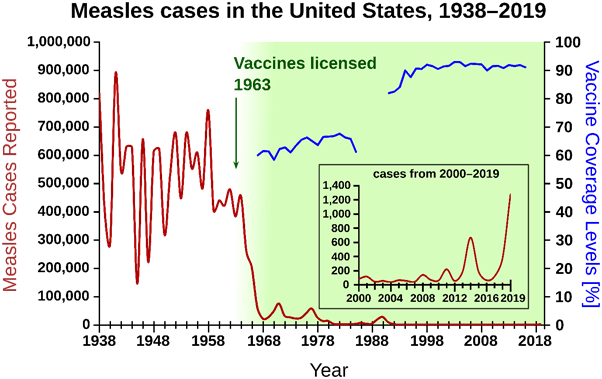
Wakefield’s implication that there was a link between MMR and autism was enough to create an uproar. Vaccination levels declined in the years following the published article, and tens of thousands of children were put at risk for the diseases preventable by MMR vaccine.6 (See figure, below.)

“The Wakefield fraud is likely to go down as one of the most serious frauds in medical history.”15

Meanwhile, in 2007, actress Jenny McCarthy began condemning the MMR vaccine for causing her son’s autism.18 Emotional appeals of a personal nature tug at anyone’s heartstrings, and her visibility provided a particularly significant platform for the anti-vax message. McCarthy authored three books on autism and helped organize a movement of parents about a vaccine-autism link. Her social position as celebrity, author, and activist resulted in undue influence against vaccination, despite federal and national scientific institute communications to assure the public that there was no credible link between the MMR vaccine and autism. The lack of confidence in MMR has damaged public health.

Rate of measles fell sharply when universal immunization was introduced8

People want to believe an individual’s anecdotal narrative over abstract, complex scientific narrative.

The influence of these two people has disproportionately swayed public attitudes against vaccination and provided momentum to the anti-vax movement. The perceived but false relationship between MMR vaccine and autism continues today despite a large number of research studies that have not found a link.19 Considerable taxpayer money has been spent to clarify for a suspicious public that the MMR vaccine is safe. One legacy of anti-vaxxers like Andrew Wakefield and Jenny McCarthy is the unnecessary scientific focus on trying to ‘prove a negative’. The most significant legacy, however, is their contribution to a climate of distrust of all vaccines and the reemergence of other previously-controlled diseases, resulting in various epidemics and deaths.20

Overwhelming scientific consensus about the safety and efficacy of vaccines invalidates arguments against vaccination.8

2. Anti-Vaxxers value personal choice above public health.

The issue of the rights of the individual versus the rights of the populace has significant ethical considerations. How these ethical considerations played out in history impacts vaccination laws and procedures today. In 1853 and 1867, the UK passed mandatory vaccination laws that fueled opposition by those who “expressed fundamental hostility to the principle of compulsion and a terror of medical tyranny.”1 This early anti-vaccination movement was met with a political response: a commission tasked with studying vaccination efficacy ruled that vaccines protected against smallpox, yet the same committee also recommended removing penalties for failure to vaccinate.1 Not only did this concession legitimize the anti-vaccination stance, it emboldened a sense of personal entitlement that allowed exemptions for certain groups of individuals within society. Significantly, this ruling paved the way for a subsequent law that allowed conscientious objectors to opt out of mandatory vaccination programs.1 Since then, many scientific and medical research studies have found that individuals who exercise religious and/or philosophical exemptions are at a greater risk of contracting infections, which put themselves and their communities at risk.21 Although the early political actions helped mollify subgroups within a disgruntled public, a precedent was set; namely, that ethical considerations of an individual could be imposed on the group. At the time the law was passed in the U.K. in 1898, it fell to the local courts to distinguish between true objection to vaccine and mere neglect.1 The democratic process was overridden and a minority wedged a legal concession into the public health protocols.  

It seems morally appropriate and entirely within ethical rights that individuals chose for themselves and their children whether to submit to a medical procedure, but unlike most medical interventions, vaccines prevent diseases that spread to other people. At the same time that anti-vaxxers claim “my body, my right,” they indicate their willingness to subject others to potential danger. The resistance to vaccines has less to do with individual health than it does with protecting individual choice. A recent report shows that mandatory vaccination fuels anti-vax sentiment to such a degree that no benefit in population health was seen compared to countries offering voluntary vaccination.22 This result is described as a backlash to an overprotective state undermining individual responsibility.

“Having the government order them to do something reinforces conspiracy theories, and people perceive their risk to be higher when it’s not voluntary.”  

Daniel Salmon, director of the Institute for Vaccine Safety at Johns Hopkins21

The argument continues to reverberate today: does population health trump an individual’s liberty to make personal medical decisions? A landmark legal precedent was set in the U.S. in 1905. At that time, the city of Cambridge, MA required vaccination, but a citizen named Henning Jacobson refused, saying it was “his right to care for his body how he knew best”.19 Criminal charges were filed against him. Ultimately, the case went before the Supreme Court, which ruled that the States had authority to protect the health of the public in the event of a communicable disease.23 The legal mandate is clear, but as with all things social, implementation requires public support.

Past and future vaccination successes

Despite the anti-vaxxer movement to repel the medical advance represented by vaccination, the success of Edward Jenner’s vaccines proved a scientific ideal: that humankind can eliminate an infectious disease. The world no longer faces smallpox epidemics. However, vaccine hesitancy was identified by the WHO as one of the top ten global health threats of 2019.24 The motivating forces within our diverse human family both drive and stymie behavior that changes the medical landscape. Understanding what shapes our health decisions, coupled with a strong drive to achieve rational outcomes, will allow future populations to embrace and benefit from medical achievements. 

“The emotions and deep-rooted beliefs –whether philosophical, political, or spiritual—that underlie vaccine opposition have remained relatively consistent since Edward Jenner introduced vaccination.”19

References

1. Porter D. & Porter R. (1988). The Politics of Prevention: Anti-vaccinationism and Public Health in Nineteenth-Century England. Medical History, 32(3), 231-252. https://doi.org/10.1017/S0025727300048225 
2. Leighton, L. S. (2020, Apr 14). Ignaz Semmelweis, the doctor who discovered the disease-fighting power of hand-washing in 1847. The Conversation. https://theconversation.com/ignaz-semmelweis-the-doctor-who-discovered-the-disease-fighting-power-of-hand-washing-in-1847-135528 
3. Tuthill, K. (2003). John Snow and the Broad Street Pump. Cricket, 31(3), 23-31. https://www.ph.ucla.edu/epi/snow/snowcricketarticle.html 
4. Riedel S. (2005). Edward Jenner and the history of smallpox and vaccination. Proc (Bayl Univ Med Cent). 18(1), 21-25. https://doi.org/10.1080/08998280.2005.11928028 
6. Hussain A., Ali S., Ahmed M., et al. (2018). The Anti-vaccination Movement: A Regression in Modern Medicine . Cureus 10(7): e2919. https://doi.org/10.7759/cureus.2919 
7. Kolbert, E. (2017, Feb 19). Why Facts Don’t Change our Minds. New Yorker. https://www.newyorker.com/magazine/2017/02/27/why-facts-dont-change-our-minds 
8. Vaccine Hesitancy. (2021, Feb 27). In Wikipedia. https://en.wikipedia.org/w/index.php?title=Vaccine_hesitancy&oldid=1009102330 
9. Einbinder, N. (2019 , Apr 29). How former 'The View' host Jenny McCarthy became the face of the anti-vaxx movement. Insider. https://www.insider.com/jenny-mccarthy-became-the-face-of-the-anti-vaxx-movement-2019-4 
10. Hoffman, J. (2019, Sep 23). How Anti-Vaccine Sentiment Took Hold in the United States. The New York Times. https://www.nytimes.com/2019/09/23/health/anti-vaccination-movement-us.html 
11. Tsou, A., Shickore, J., & Sugimoto, C.R. (2014). Unpublishable research: examining and organizing the file drawer. Learned Publishing, 27, 253-267. https://doi.org/10.1087/20140404 
12. GI Society: Canadian Society of Intestinal Reseasrch. (2011). Andrew Wakefield’s Harmful Myth of Vaccine-induced “Autistic Entercolitis”. Badgut. https://badgut.org/information-centre/a-z-digestive-topics/andrew-wakefield-vaccine-myth/ 
13. Kotwani, N. (2007). The Media Miss Key Points in Scientific Reporting. AMA Journal of Ethics, 9(1), 188-192. https://doi.org/10.1097/01.NCQ.0000277777.35395.e0  
14. Wakefield, A.J., Murch, S.H., & Anthony, A., et al. (1998). RETRACTED: Ileal-lymphoid-nodular hyperplasia, non-specific colitis, and pervasive developmental disorder in children. Lancet, 351(9103), 637-641. https://doi.org/10.1016/S0140-6736(97)11096-0 
15. Wakefield a fake: The MMR vaccine and autism: Sensation, refutation, retraction, and fraud https://www.ncbi.nlm.nih.gov/pmc/articles/PMC3136032/ 
16.  BMJ: Wakefield Paper Alleging Link between MMR Vaccine and Autism Fraudulent. (2011, Jan 6). The History of Vaccines. Retrieved from https://www.historyofvaccines.org/content/blog/bmj-wakefield-paper-alleging-link-between-mmr-vaccine-and-autism-fraudulen 
17. Gerber, J.S. & Offit, P.A. (2009). Vaccines and autism: a tale of shifting hypotheses. Clin Infect Dis. 48(4):456-461. https://doi.org/10.1086/596476 
18. Jenny McCarthy. (2021 Mar 5). In Wikipedia. https://en.wikipedia.org/w/index.php?title=Jenny_McCarthy&oldid=1009414878 
19. History of Anti-vaccination Movements. (2018, Jan 10). The History of Vaccines. Retrieved March 5, 2021, from https://www.historyofvaccines.org/content/articles/history-anti-vaccination-movements 
20. Andrew Wakefield. (2021 Mar 9). In Wikipedia. https://en.wikipedia.org/w/index.php?title=Andrew_Wakefield&action=history 
21. History of Anti-vaccination Movements. (2018, Jan 10). Ethical Issues and Vaccines. Retrieved March 9, 2021, from https://www.historyofvaccines.org/content/articles/ethical-issues-and-vaccines 
22. Vageesh, J. (2019, Nov 15). Mandatory vaccination is not the solution for measles in Europe. The Conversation. https://theconversation.com/mandatory-vaccination-is-not-the-solution-for-measles-in-europe-126946 
23. Jacobson v. Massachusetts. (2021, Mar 5). In Wikipedia. https://en.wikipedia.org/w/index.php?title=Jacobson_v._Massachusetts&oldid=1002758081 
24. Ten threats to global health in 2019. (2019). The World Health Organization. https://www.who.int/news-room/spotlight/ten-threats-to-global-health-in-2019

Preview(opens in a new tab)

The Social and Scientific History of Vaccines

There will always be opposition to action, because it is human nature to be wary and to resist change. It is also within us to dare and, most importantly, to reason.

The story of vaccines began with fear of infectious disease. For over 3,000 years, smallpox decimated populations, and civilizations collapsed, while on a personal level many surviving individuals suffered hideous scarring or blindness, and parents agonized over the high likelihood of death of their infected children. The need to protect from this disease was desperate. Humankind faced this scourge and discovered a path to a solution which, as in all good stories, involved tragedies and suffering, idealism and courage, villains and heroes. But as a real-life story, this also encompasses medical quackery, objectification of women, war strategies, and an assortment of individuals who bucked convention: a courageous aristocratic mother, a selfless religious leader, an undaunted researcher. Unfortunately, this story does not end with the lauded “medical breakthrough” of vaccination, but continues with fanaticism, deceit, distrust, abuse of power and fame, and misinformation that is propagated to this day with the anti-vaxxer movement.

Ultimately, this vaccine story is about both the scientific and the human side of medical advancement. A not-inconsequential part is the role played by social influencers, who often have little to do with the scientific validity of the vaccine story. Their credibility in the public domain underscores the need to understand how societal structure and the art of persuasion influences scientific discoveries and, ultimately, why people make the decisions they do about health care.

Photo by Dziana Hasanbekava on Pexels.com

Let’s start our story…

Early civilizations struggled for survival against the elements, natural disasters, starvation, war, and disease. They also struggled within their societies to make and enforce group decisions. However, early recorded histories of scientific advancements do not include insight into the battles for incorporating the new knowledge into medical practice or for social acceptance. (Sidenote: a fascinating example of scientific investigation and social impediment is provided by the story of the identification of cholera in the mid-1800s.1) Scientists, and historians, stick to the facts.

As early as 430 B.C. it was noted that people who survived smallpox did not contract this disease again.2 Practitioners in ancient China acted on the concept of artificial induction of immunity by blowing a powder of dried crusts from smallpox sores into the noses of those susceptible to infection, with the hope of inducing a milder form of smallpox that could be survived. In Persia, people ate prepared crusts from smallpox sores. In India, blankets from the mildly-diseased patients were wrapped around children to intentionally infect them with a less lethal form of disease that would hopefully confer resistance. These records indicate efforts to resist what was felt to be an inevitable scourge, although the level of effectiveness of these protocols was not scientifically monitored.

The concept of grafting disease from person-to-person became known as inoculation or variolation.3 This ultimately involved taking fresh matter from a smallpox pustule and introducing it into a scratch or incision made in the forearm of a child. Although such practices could also induce virulent disease or even spread other diseases such as tuberculosis or syphilis,4 these practices offered some hope of survival in the face of the deadly risk of smallpox.

Fear of tragedy can overcome inaction; Risk-taking itself is avoidance…in action.

Beauty, and a Mother’s Love…

For medical advancement, knowledge is not enough unless put into practice. Despite an eagerness to learn about innovations from other cultures, eighteenth century Europeans did not embrace variolation even after independent descriptions reached Europe from two British physicians in Turkey.4 Interestingly, the practice of variolation had derived from a beauty treatment of Caucasus, whose women were in great demand in the Turkish sultan’s harem because of their legendary beauty.4 Girls were inoculated in parts of their bodies where scars would not be seen. The fact that these girls survived to adulthood through repeated smallpox plagues had not gone unnoticed by the Turks. However, London physicians paid only passing interest to the preventative practice of variolation, loath to stake their reputations on such an unconventional idea.3

It took a woman to shake consciousness into the Royal Society’s Physicians in England. Lady Mary Wortley Montagu moved to Turkey in 1717 with her ambassador husband.4 Two years earlier, her own beautiful face had been disfigured by smallpox, and her brother had died of the illness. After witnessing the practice of variolation, she became determined to prevent the ravages of smallpox and convinced the embassy surgeon Charles Maitland to inoculate her 5-year-old son. When they returned to London several years later, Lady Montagu had the same physician inoculate her 4-year-old daughter in the presence of physicians of the royal court.

This combination of determination and influence within the high-society realm succeeded in bringing variolation to the attention of not only the Royal Society of London but also the royals themselves, who authorized testing first on inmates, then orphans. (These actions were not the result of a philosophy to first protect the weakest and most vulnerable of the population, but rather targeted ethically-unprotected, available, concentrated, and – fortuitously in a research-sense – especially susceptible groups.) The successful trials enticed the Princess of Wales to inoculate her own two children.3 This led to a certain level of acceptance of the procedure, presumably among the elevated classes of society that sought to attain the good life (or even life itself, protected from disease) modeled by the ‘social influencers’ of the time.

The hope this procedure brought did not bring about a shift in the practices of a population. Reports of sporadic inoculation-related deaths dampened both the lay person eagerness and physician willingness to be connected with such a risk, even at a low level.3 Behavioral shifts within the general European population required more nudging, presumably from those governing not their social  affairs, but their spiritual and physical existence. Eventually, engineering the coordinated efforts necessary to affect change required political mandates.

Higher Powers…

Early social influencers cultivated their position with power, money, and reputation for moving in the first circles of society. Researchers and medical professionals held significant authority and responsibility for medical advancement. As immunization began its ascent as a tool of survival for humankind, two other regulating sectors came into play: religious leaders and governmental authority. The interplay between these forces shaped the future of what would come to be known as vaccines.

Disasters have long been felt be to do to God’s wrath, and not surprisingly, early resistance to the concept of inoculations was voiced by religious leaders, who felt that tampering with God’s punishments of disease and illness was the devil’s work.5 Yet it was also a religious leader who became an early champion of variolation (inoculation with pus from an infected person).3 Rev. Cotton Mather learned of variolation from a  slave who had been inoculated in Africa as a child and later read the British physician reports about variolation from Turkey. He not only helped create a variolation program during a smallpox epidemic in Boston in 1721, but he sought to sway public sentiment by analyzing the lethality of smallpox by variolation (2%) versus naturally occurring smallpox (14%).3 “This may have been the first time that comparative analysis was used to evaluate a medical procedure.”4 The data helped variolation become widespread in the colonies of New England and had an even more profound impact in England, where despite physician skepticism, the statistical numbers were influential in establishing a new practice of care. From England, rapid adoption of variolation spread throughout Western Europe. Significantly, in 1757, one of the thousands of children to be inoculated was a young boy named Edward Jenner.3

A scientist’s dream is for the data to speak for itself. Surprisingly, this occurred with Mather’s report.3 Smallpox epidemics conveyed such a health threat that the lesser threat of spreading disease through variolation became acceptable. The lowered risk/benefit ratio prompted mass behavioral change that influenced even military policy.4 In 1776, American soldiers under George Washington suffering from a smallpox epidemic significantly reduced the number of healthy troops available to retake Quebec from the British.6 The British soldiers had all been variolated. Subsequently, Washington instituted a new procedure such that by the following year all his soldiers underwent variolation before beginning new military operations.4  

Mather’s role in spreading the practice of variolation is largely overlooked by medical historians because the final leap from scientific awareness to public health practice belonged to a physician initially interested in animals. 

Dawn of Vaccination…

The young boy who had been variolated in England in 1757 survived the mild case of smallpox with which he became infected and was subsequently immune to the disease.3 Even as a boy, Edward Jenner was very interested in science and nature.4,7 He apprenticed as a surgeon, but in addition, his teacher encouraged his interests as a naturalist and experimental scientist. It was his study of the hatchling behavior of cuckoo birds that resulted in his election as a fellow of the Royal Society in 1788, although many naturalists in England dismissed his work as pure nonsense. It took almost 100 years after his death to have his observation confirmed with photography.4 Mostly, Edward Jenner is known around the world as the Father of Immunology.7

Jenner apprenticed at age 13 to a country surgeon.4 It was at this time he first heard a dairymaid claim she would never have smallpox because she had been infected with cowpox. Later, at age 47 and after having risen to some prestige as a surgeon and researcher, Jenner turned his attention to the idea of disease prevention that he had been hearing from dairymaids for years. Scientifically, Jenner concluded that cowpox (or in Latin, vaccinia) not only protected against smallpox but also could be transmitted from one person to another as a deliberate mechanism of protection. He made this intellectual leap even though the germ theory advanced by the Austrian Marcus von Plenciz in 1762 had not gained traction against the miasma theory of bad air.8,9 Jenner called the procedure vaccination, most likely because it was felt to be uniquely applicable to cowpox.4 Unlike variolation, cowpox transmission through vaccination would not lead to potentially lethal smallpox disease. No one anticipated the immunologic revolution that would grow around ‘vaccination’, nor the lives that could be saved from a myriad of infectious diseases with this approach. His fabled inoculation of 8-year-old James Phipps using matter from Sarah Nelms’ fresh cowpox lesions seemed in hindsight to be a breakthrough that was fated to ultimately rid the world of one of its deadliest scourges. However, the Royal Society rejected his communication on the experiment, and his vaccination idea almost died at the outset.4 A year later and with more example cases, he privately published a booklet, but to a volatile reaction in the scientific community.2 His steadfast belief in vaccination spurred him to dedicate his career and fortune to promoting use of his vaccine. With single-minded intent, he sent vaccine to his medical acquaintances and to anyone else who requested it. It must be noted that vaccination initially became popular not through Jenner himself, but through the activities of others, particularly the surgeon Henry Cline with whom he shared the vaccine.4

The vaccine was propagated by extracting material from a vaccinated individual’s pustule to use on subsequent patients. This arm-to-arm passage was periodically supplemented with cowpox material when an active case of this rare disease was discovered. Not surprisingly, early documentation indicated vaccination had mortality rates similar to those of variolation, likely because this supposedly safer cowpox-induced vaccine material was occasionally contaminated with smallpox.3,10

Nonetheless, cowpox inoculation went ‘viral’ (in the modern sense of the word) and reached the United States in 1800. Why a statistically unremarkable procedure became so sought after remains enigmatic, except that perhaps people were ready to accept that science could provide a safe preventive measure and that medical researchers like Jenner would deliver this advancement. Jenner’s name remained linked to the procedure that he named. Even Thomas Jefferson, who became a fervent proponent, wrote to Jenner thanking him for his work.3 Although it’s been written that Jenner made no attempt to enrich himself through his discovery, he did petition the House of Parliament for recognition of his claim and for recompense.4 By 1801, over 100,000 people were vaccinated,10 and Jenner had devoted so much time to his cause that his private practice and personal affairs had suffered.4 Subsequently, on two occasions, the British Parliament awarded him significant sums of money. Jenner actively sought this compensation, but whether for necessity or for proprietary glory and financial accolades is unclear. Interestingly, later that same year (1801), the U.S. farmer Benjamin Jesty requested recognition of his use of cowpox in 1774.3 He lacked scientific standing and had no vaccine to share, but his claim highlights that the idea was not original or even inaccessible by scientific lay people.

“In science credit goes to the man who convinces the world, not the man to whom the idea first occurs.”

Francis Galton

What is clear is that although Jenner received worldwide recognition and many honors, he also found himself subjected to attacks and ridicule. Prominent philosophers such as Robert Thomas Malthus felt smallpox provided a necessary means of population control, particularly among the overcrowded lower class.3 Antivaccination groups proliferated and used the supposed defects of Jenner’s earlier cuckoo study to cast doubt on his credibility for more than a century. The National Vaccine Agency in the U.S., established in 1813, lost its funding in 1822 due to legitimate safety concerns about the vaccine. The scientifically valid issues of questionable duration of immunity, contamination and decomposition of the vaccine, and shortage of cowpox matter plagued early practitioners. Nonetheless, by 1821, vaccination was required by law in Bavaria, Norway, Sweden, and Denmark and gradually replaced variolation, which became prohibited in England in 1840.11 The political endeavors helped cement widespread propagation of vaccination.

Societies subjected to ruling classes, religious leaders, and the educated elite learned to accept rules that provided cohesion and safety.

“It’s the law!”

In 1979, the World Health Organization declared smallpox an eradicated disease. Edward Jenner is credited with saving over 200 million lives.12 His work is said to have “saved more lives than the work of any other human”.7

Propelling innovations in healthcare…

Why, then, did Edward Jenner’s ideas take off and ultimately rid the world of its oldest scourge, smallpox? His idea of using a related disease (cowpox) to confer specific immunity to smallpox was not original nor was he the first to attempt inoculation for this purpose. However, reexamination of the historic context of his work demonstrates that Jenner’s contribution was a vital step toward the elimination of smallpox. People had been injecting smallpox-infected matter subcutaneously to prevent disease for centuries before his time, which meant there was a foundation in Jenner’s time for rapid acceptance of his recommendations. Significantly, his relentless promotion of vaccination and his influence within the medical community capitalized on the confluence of social, religious, political, and scientific factors to make an impact on the practice of medicine and provide focus for future vaccine advancements.

Jenner succeeded for three crucial reasons:

1) His interest in zoology primed  him to study the protective effects of a cow disease. He recognized the species disparity between man and cow that resulted in affliction with different diseases (cowpox and smallpox, respectively), yet made the intellectual — but at that time biologically unexplainable — leap that resistance to a human disease could be acquired by resistance to a cow disease.  Although cowpox was well-known to protect against smallpox, Jenner used deliberate human-to-human transmission of cowpox to render smallpox infection nonlethal.

William Osler records that … Jenner …(was given) advice, well known in medical circles (and characteristic of the Age of Enlightenment), “Don’t think; try.”7

Smallpox was so common and devastating that any proof of protection provided hope. The success of variolation despite the risk of disease strengthened that hope. Finally, communication of the hope through social, scientific, religious, and political arenas bolstered widespread adoption.

2) His medical and biological research training provided the pedigree, the network, and also the publication avenue to sway a skeptical medical community.

3) Most of his success, though, came from his desire to forward vaccination, which meant that he worked tirelessly and without the stimulus of financial gain to provide vaccine to the medical community. He even built a hut in his garden to vaccinate the poor for free. Indeed, it was his relentless promotion and devoted research of vaccination that paved the way to a smallpox-free world.4

This third reason suggests Jenner’s success rests on his intent to implement his theory as a new medical procedure. Despite mixed reactions from the scientific community, he sent vaccine to his medical acquaintances and to anyone else who requested it.4 The support from these other doctors popularized the smallpox vaccine, which ultimately allowed Jenner to conduct a nationwide survey in 1799 to prove that cowpox infection protected against smallpox infection.4 The vaccine’s effectiveness convinced two noteworthy proponents who then helped secured worldwide acceptance of Jenner’s vaccine:7 1) a Spanish explorer named Dr. Francisco Javier de Balmis, who led a three-year expedition of the Americas and China, and who propelled the vaccine’s use into these parts of the world by successfully completing his aim of giving thousands the smallpox vaccine, and Napoléon Bonaparte, who vaccinated all his French troops and named Jenner as “one of the greatest benefactors of mankind.”

The elimination of smallpox in the world as an unqualified success story required an insightful and untiring champion who addressed a critical need with a scientific approach to change the world. However, history has buried incredible insights from those whose ideas did not make it on the world scene. The difference is that Edward Jenner’s story also exists within a societal time frame that shaped the outcome of his endeavor.

“However, opposition against vaccines was not only manifested in theological arguments; many also objected to them for political and legal reasons. After the passage of laws in Britain in the mid-19th century making it mandatory for parents to vaccinate their children, anti-vaccine activists formed the Anti-Vaccination League in London. The league emphasized that its mission was to protect the liberties of the people which were being “invaded” by Parliament and its compulsory vaccination laws. …Since the rise and spread of the use of vaccines, opposition to vaccines has never completely gone away, vocalized intermittently in different parts of the world due to arguments based in theology, skepticism, and legal obstacles.”5

Even early on Jenner’s vaccine faced fierce opposition from those who wanted the freedom to continue getting sick and die. Besides not being “God’s Will”, vaccines require subjugation of one’s body to outside influences, public policy that promotes the common rather than solely personal good, and acceptance of expertise beyond one’s own in the development and administration of public health initiatives. The innate belief is that illnesses are ‘natural’ and governmental influence is therefore unnatural. These beliefs persist and are propagated in the anti-vaxxers campaign in modern times, with the direct result that infectious diseases that were previously being controlled are increasing in prevalence in susceptible populations around the world. The next modern infectious-disease savior may not be a scientist cresting the world’s struggles with a dire medical need as much as a reformist overhauling social cohesion and medical belief issues.

References:


1.	Buczek M. (2018, Feb 20). Wells and Wellness Part I: The History of Cholera. American Society for Microbiology. https://asm.org/Articles/2018/February/wells-and-wellness-part-i-the-history-of-cholera
2.	Helfert, S.M. (2015). Historical Aspects of Immunization and Vaccine Safety Communication. Current Drug Safety, 10 (1), 5-8. https://doi.org/10.2174/157488631001150407103723
3.	Gross, C.P. & Sepkowitz, K.A. (1998). The Myth of the Medical Breakthrough: Smallpox, Vaccination, and Jenner Reconsidered. Int J Infect Dis, 3:54-60. https://doi.org/10.1016/S1201-9712(98)90096-0
4.	Riedel, S. (2005). Edward Jenner and the history of smallpox and vaccination. BUMC Proceedings, 18:21-25. https://doi.org/10.1080/08998280.2005.11928028
5.	Hussain, A., Syed A., Madiha A., & S. Hussain. (2018). The Anti-vaccination Movement: A Regression in Modern Medicine. Cureus, 10(7): e2919.  https://doi.org/10.7759/cureus.2919
6.	Thompson, M.V. (2020, Nov 23). Smallpox. George Washington’s Mount Vernon. https://www.mountvernon.org/library/digitalhistory/digital-encyclopedia/article/smallpox/ 
7.	Edward Jenner. (2020, Nov 12). In Wikipedia. https://en.wikipedia.org/w/index.php?title=Edward_Jenner&oldid=988325290
8.	Germ theory of disease. (2020, Oct 9). In Wikipedia. https://en.wikipedia.org/w/index.php?title=Germ_theory_of_disease&oldid=986022465  
9.	Eriksen, A. (2013). Cure or Protection? The meaning of smallpox inoculation, ca 1750-1775. Med. Hist, 57(4):516-536. https://doi.org/10.1017/mdh.2013.37
10.	Vaccination. (2020, Nov 12). In Wikipedia https://en.wikipedia.org/w/index.php?title=Vaccination&oldid=988298689  
11.	Thein, M.M., Goh L.G., & Phua K.H. (1988). The Smallpox Story: From Variolation to Victory. Asia Pacific Journal of Public Health, 2(3):203–210. Retrieved Nov 14, 2020, from https://www.jstor.org/stable/26720502  
12.	Ochmann, S. & Roser M. (2018). Smallpox. Our World In Data. Retrieved Nov 13, 2020, from https://ourworldindata.org/smallpox#costs-of-smallpox-and-its-eradication

The Journey Begins

post

Good company in a journey makes the way seem shorter. — Izaak Walton

“Excuse me, why are you doing that?”

Our behavior depends on so many variables that it’s mind-boggling to think we’ll ever get a grasp of why people do the things they do. The mystery of what influences how we act has spawned entire areas of study to analyze, predict, direct, anticipate, and respond to what has governed our success as a species: our behavior.  Human activity also has – frighteningly – become an out-of-control and destructive force, and one ramification is for the earth to become uninhabitable due to climate change.

I’m starting a blog to discuss and explore the complexities of behavior, particularly highlighting the knowledge/belief aspect. As a scientist, I have become fascinated with how reasoning only partially impacts our actions. In particular, as an immunologist, I have always celebrated the fact that this fairly new branch of science, the study of the immune system, has so successfully impacted population health. How can one argue with the ELIMINATION of small pox, which was once the scourge of the world?! Yet, despite this epic success story, the idea of vaccines has been vilified to the point that diseases that had been successfully controlled by childhood vaccinations are now making a comeback. Children are dying because of misinformation. But it’s more than that: providing facts do not sway the deep-seated belief of anti-vaxxers that vaccines are inherently harmful. The emotional component of belief, along with a social coherency thread, entwine to unbalance what should be a simple, rational, decision-making process.

I am perplexed and fascinated, frustrated and intrigued. What makes people decide how to act on something as fundamentally personal as their own (or their childrens’) healthcare choices? Why do the risks outweigh the benefits on a belief level but not on a rational level?

I plan to grapple with this issue by investigating different perspectives, such as those from doctors, health scientists, psychologists, sociologists, philosophers, economists, theologians, policy analysts, pharmaceutical executives, politicians, celebrities, ethicists, religious leaders and others to unravel human medical decision-making processes. The focus, or at least the initial intent, will be to promote a self-honing decision-tree for increasing positive healthcare decision-making at a personal level. If we can answer the question “Why are you doing that?” perhaps we can understand how to wrest the medical decision-making process from emotional influences such as third-party anecdotes, family pressures, social-media trends, mass-marketing, community constraints, religious overtones, and overlying power issues.

Let’s delve into the Science of Reasoning, starting at the individual level. To that aim, I want to begin with a history of vaccines, followed by how the modern anti-vaxxer movement took off.

Photo by Valentin Antonucci on Pexels.com

Blog at WordPress.com.

Up ↑